

 Facebook
 X
X
 Pinterest
 Copy Link
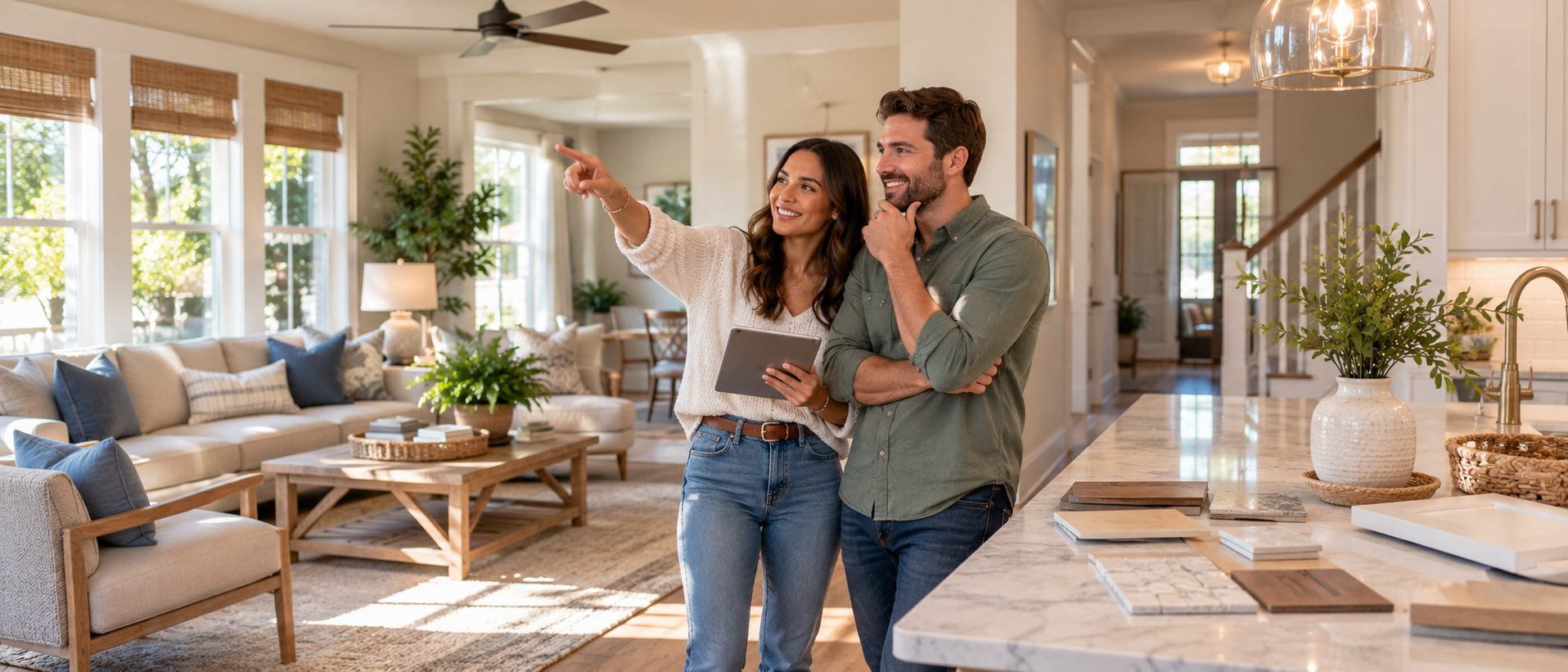
A first-time buyer’s guide to looking past finishes and recognizing what really matters in a home.
When you’re buying your first home, it’s surprisingly easy to get distracted by the things you notice first.
The wall color.
The flooring.
The kitchen cabinets.
A bathroom that looks twenty years older than you’d like.
Sometimes buyers walk into a perfectly good home and almost immediately decide it isn’t “the one” because they don’t like what they’re seeing.
Other times, the opposite happens.
A beautiful kitchen, fresh paint, and great furniture can make it easy to overlook something about the home that may matter much more six months after you move in.
So when I’m walking through a home with buyers, I like to separate the conversation into two questions:
What can we change?
And…
What would you have to learn to live with?
Knowing the difference can completely change the way you look at a house.
Start With the Things That Are Mostly Cosmetic
Paint is probably the easiest example.
You may hate the bright blue bedroom. Someone else may love it.
Either way, the walls can be painted.
Light fixtures can usually be changed. Cabinet hardware can be replaced. Rooms can be decorated differently. Landscaping can evolve. Some flooring and cosmetic finishes can eventually be updated.
None of that means changes are free.
Even seemingly simple projects cost money and take time, and that’s something to consider when you’re already planning for the expenses of homeownership.
But I don’t want a buyer to reject a home that otherwise works beautifully for them simply because the previous owner had very different taste.
Try to look through the decorating.
The question isn’t:
“Would I have chosen this?”
It’s:
“Can I reasonably make this mine?”
That is a very different question.
Then There Are Changes That Are Possible—but Not Simple
This is where the conversation gets more interesting.
Could you remodel a kitchen?
Probably.
Could you replace windows, renovate bathrooms, change flooring throughout the house, or alter part of the floor plan?
Possibly.
But “it can be changed” doesn’t automatically mean you’ll want to change it.
There is a difference between repainting a bedroom one Saturday and living through a major renovation.
Before dismissing a concern by saying, “We’ll just redo that later,” think through what later might actually involve.
How much might the project cost?
Would you need an appropriate contractor or other professional?
Could you comfortably live in the house while the work is being done?
Is this something you genuinely want to take on?
And does your budget leave room for it after you’ve purchased the home?
That’s why I encourage buyers to leave room in the budget for life after closing, including the ordinary and unexpected expenses that come with owning a home.
You don’t necessarily need answers to every renovation question during a showing.
But you do need to recognize when you’ve moved from cosmetic change into real project territory.
Some Things Come With the House
Then we get to the things that are much harder—or impossible—to change.
You can’t move the lot.
You can’t make the street quieter.
You can’t shorten your commute by renovating the kitchen.
You can’t change which direction the backyard faces.
You can’t add acreage that isn’t there.
And you generally can’t change the character of the surrounding area simply because you love the house sitting in the middle of it.
That’s why I want buyers to look outside as carefully as they look inside.
Stand in the backyard.
Listen.
Look at the neighboring properties.
Think about where you’ll drive every day.
Notice how close the homes are to one another.
Ask yourself whether the setting works for the way you want to live.
You may be able to change quite a lot about a house.
You can’t remodel its location.
Pay Attention to the Floor Plan
A floor plan falls somewhere in the middle.
Sometimes layouts can be changed.
Walls may be moved. Rooms may be reconfigured. Additions may be possible.
But those aren’t decisions I want a first-time buyer casually assuming will be easy or inexpensive.
Instead, try imagining the house with your actual life inside it.
Where do you come in with groceries?
Where does everyone drop their shoes, backpacks, or work bags?
Can you see yourself using the kitchen?
If you work from home, where would that happen?
If everyone gathers at your house for holidays, where would they gather?
If you have children or hope to, does the bedroom arrangement work for you?
A floor plan doesn’t have to be perfect.
But it should make sense for enough of your everyday life that you’re not immediately planning to fight against the house.
Don’t Let a Beautiful Finish Make the Decision for You
This works both ways.
Just as outdated finishes can make buyers dismiss a good home, beautiful finishes can make buyers overlook things they shouldn’t.
A gorgeous kitchen can be exciting.
So can a spa-like bathroom or beautifully staged living room.
Enjoy them.
But then keep looking.
Does the location work?
Does the home have enough storage?
How does the layout function?
What is the condition of the property?
Does the yard fit what you wanted?
How does this home compare with others you’ve seen?
And does the price still make sense for your budget?
These are exactly the kinds of decisions I want buyers to understand before buying their first home, because once you know what really matters to you, it’s much easier to keep an impressive finish from making the decision for you.
The countertops may be beautiful.
You still have to live with everything surrounding them.
Decide What You’re Willing to Take On
Some buyers love projects.
They walk into an older home and immediately start imagining what it could become.
Other buyers would rather unpack the boxes and be finished.
Neither approach is wrong.
What’s important is being realistic about which person you are.
If you don’t enjoy projects, don’t convince yourself you’ll suddenly want to spend the next three years renovating because the house seems like a good deal.
If you do enjoy making a home your own, don’t automatically dismiss something because the finishes aren’t current.
Your tolerance for change should be part of your home search.
That’s one reason there isn’t a universal definition of the “right house.”
We’re looking for the house that’s right for you.
Think About the Life, Not Just the List
A first home rarely checks every box.
And that’s okay.
You may compromise on the size of the laundry room and discover you love the backyard.
You may choose an older kitchen because the location makes your daily commute easier.
You may decide one less bedroom is worth it because the monthly payment leaves you more breathing room.
Those aren’t necessarily sacrifices.
They’re choices.
And that’s one reason I believe your first home is about more than getting the keys. You’re choosing the setting for the life you’ll begin creating once those keys are yours.
The important thing is understanding which choices affect your life and which ones mostly affect the way the house looks today.
That’s a distinction worth learning early in your home search.
Look Beyond What You’re Seeing Today
One of the things I hope first-time buyers learn during the search is how to look at a home with two perspectives at once.
See it as it is.
And imagine what it could reasonably become.
Maybe the dining room color isn’t yours.
Maybe you’d eventually replace the flooring.
Maybe the landscaping needs some love.
Those things can change.
But if you like the location, the home works for your everyday life, the important pieces make sense, and the numbers are comfortable, don’t let someone else’s decorating choices make the decision for you.
At the same time, don’t let beautiful finishes convince you that something important doesn’t matter.
Here’s what I’m seeing.
Let’s talk through it.
Then you can decide which things you’re happy to change—and which ones you don’t want to spend years learning to live with.
A Milestone Worth Celebrating
Your first home doesn’t have to look exactly the way you imagined on the day you get the keys.
There can be something wonderful about painting the first room, planting something in the yard, changing a light fixture, or slowly making a space feel like yours.
Sometimes the milestone isn’t finding a finished home.
It’s finding the right place to begin making one.
Continue Reading
Start with Bethany’s complete first-time buyer guide
Buying Your First Home: What You Need to Know Before You Start
Choose a home budget that leaves room for your life
How Much House Can You Afford—and Still Feel Comfortable Living There?
Why your first home is about more than closing day
Why Buying Your First Home Is About More Than Getting the Keys
The philosophy behind Life Happens Here
A House Is Where You Live. A Home Is Where Life Happens.
Whenever you’re ready for your next milestone, I’ll be here to celebrate it with you.
Bethany Mixson
REALTOR® | ERA American Real Estate
Life Happens Here
Celebrating the milestones that make a house a home.
